

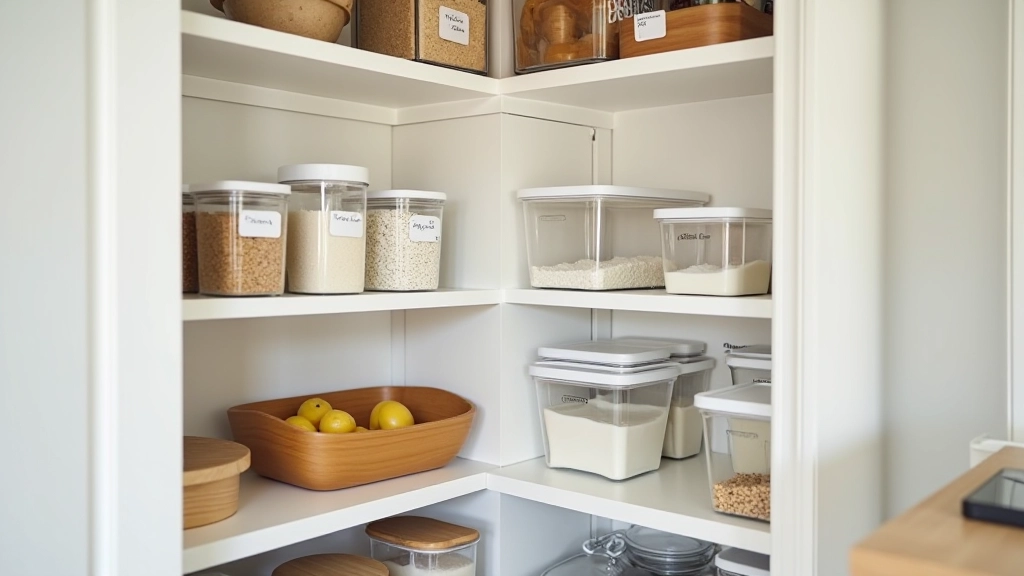

Your pantry doesn't need to be huge to work well. It's not about having loads of space — it's about using what you've got smartly. We've tested dozens of pantry hacks with real families in real kitchens, and the best ones are surprisingly simple. No expensive shelving units required. No dramatic reorganisation. Just straightforward techniques that actually stick.
The difference between a frustrating pantry and a functional one often comes down to three things: visibility, containers, and a simple system. When you can see what you've got, things don't get lost at the back. When similar items live together, you find them faster. When there's a logical arrangement, you stay organised without overthinking it.
01
Use Clear Containers for Everything You Can
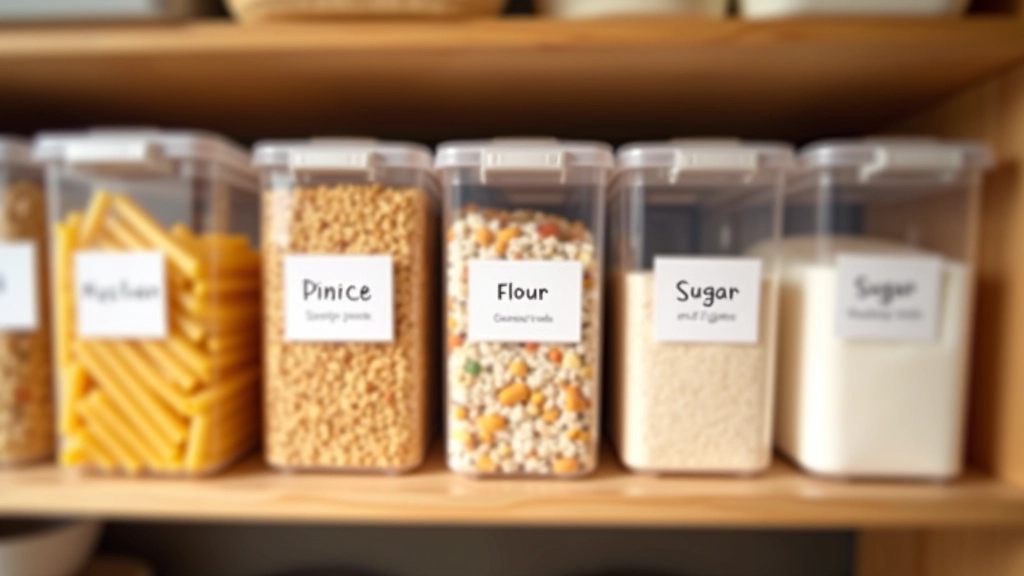
Transparent containers are genuinely transformative. You'll spot what you need instantly and notice when you're running low before it becomes a problem. The trick is choosing containers that stack neatly and fit your shelf heights.
Cereals, pasta, flour, sugar, nuts — anything that comes in awkward packaging benefits from decanting. We've found that uniform container sizes work best. If everything's the same height and depth, they arrange like Lego blocks. Plus, it looks intentional. Professional, even.
Pro tip: Label everything with masking tape and a permanent marker. Include the item name and the date you opened it. Dried goods last longer than you'd think, but you'll want to know what's actually fresh.
02
Put Small Items on Rotating Shelves
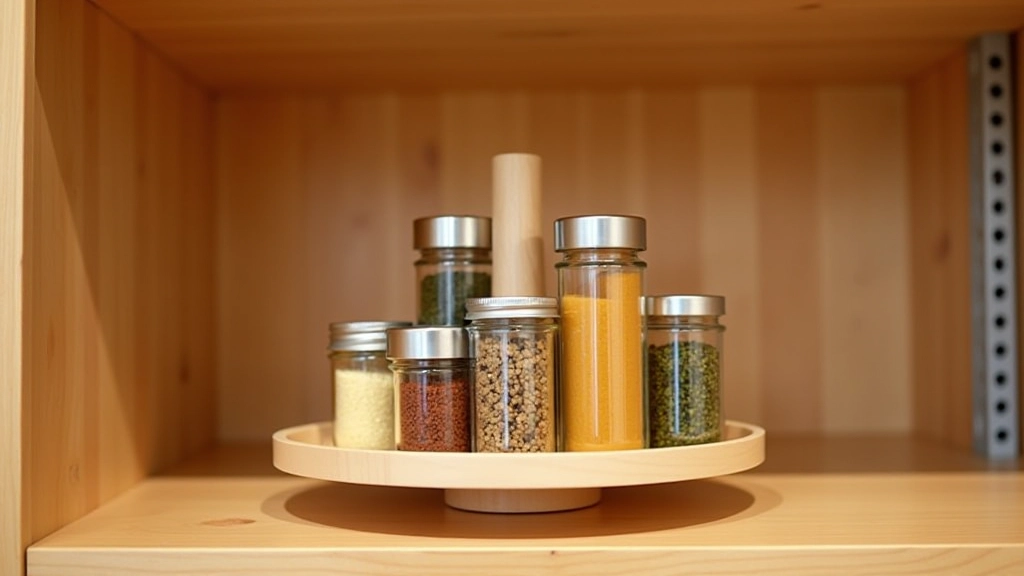
Spices, jars, tins — small items get lost easily on regular shelves. A rotating carousel or turntable changes that completely. You spin it and everything comes into view. No more reaching to the back and forgetting what you've got.
Lazy Susans work on any shelf and cost between £8-15 from IKEA or B&Q. They're especially brilliant for spices. You can fit 20-30 jars on a decent-sized one, and they're all accessible without moving anything else. It's a small investment that saves enormous amounts of time and frustration.
Consider getting two — one for spices and one for baking ingredients or condiments. The rotation means nothing gets permanently buried.
03
Create Zones by Category and Use Baskets
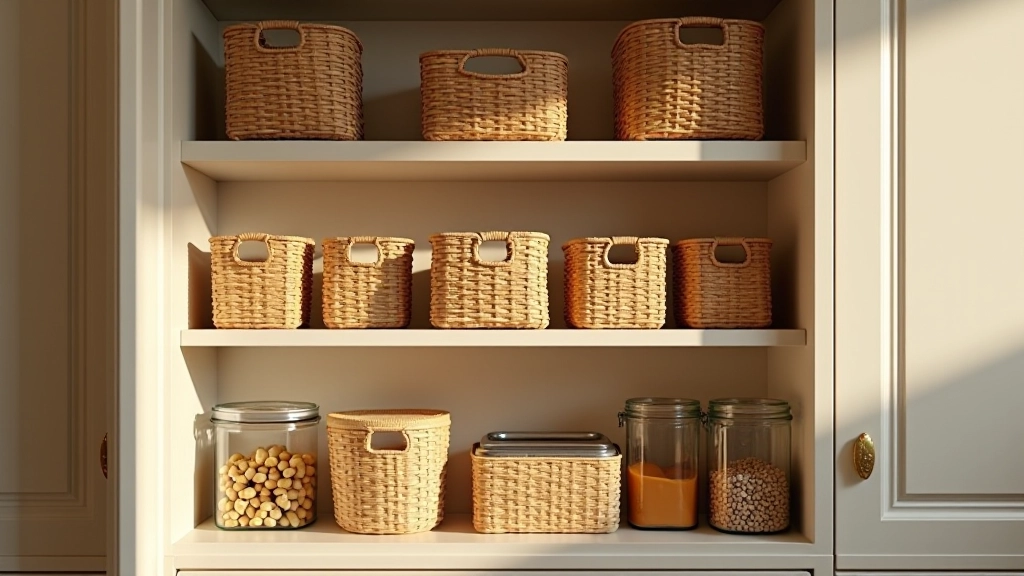
Grouping similar items together is the foundation of a working pantry. Cereals in one spot, baking ingredients in another, snacks grouped, tins organised. When you know where to look, you save time and you're less likely to buy duplicates.
Baskets help define these zones. They're not just containers — they're visual signals. When someone opens your pantry, they instantly understand the system. Woven baskets from IKEA (around £5-10 each) look good and are sturdy enough for heavy items like tins or heavier bags.
- Top shelf: Light, less-used items (special occasion ingredients)
- Eye-level shelves: Daily items (cereals, pasta, tea)
- Lower shelves: Heavy items (tins, oils, heavier goods)
- Door baskets: Seasonings, small jars, frequently grabbed items
04
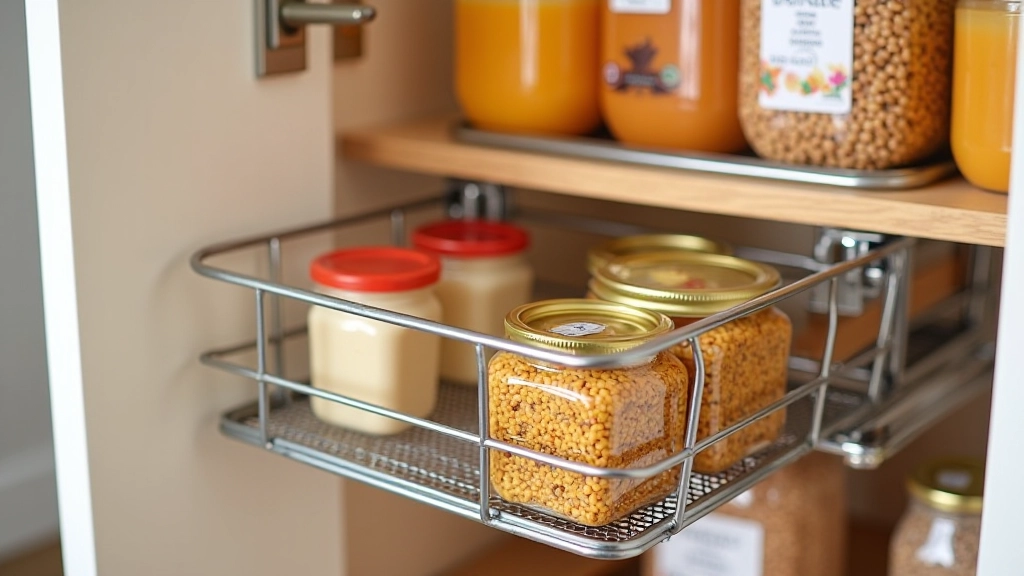
Add Pull-Out Baskets for Deep Shelves
Deep pantry shelves are brilliant for storage but terrible for actually finding things. Items disappear into the shadows at the back. Pull-out baskets solve this completely. You can slide them out and see everything at once.
B&Q and IKEA stock wire baskets designed for this. They're typically £10-20 and work with most standard shelving. Install two or three depending on your shelf depth. They're particularly good for heavier items — tins, bottles, jars — because the wire construction is sturdy.
Don't have deep shelves? You can achieve the same effect with shallow baskets on regular shelves. The key is preventing items from getting lost behind other items.
About This Guide
This article is informational and based on practical experience with UK storage solutions. The techniques described are general guidance and may need adjustment depending on your specific pantry layout, local product availability, and personal preferences. Prices and product availability change regularly — check current prices at IKEA UK and B&Q before purchasing. We've referenced these retailers as common sources for affordable storage solutions in the UK, but you're welcome to source equivalent products elsewhere. Every pantry is different, so adapt these hacks to what works for your space and household.
Your Pantry Can Work Better Right Now
You don't need a Pinterest-perfect kitchen or loads of money spent on fancy storage systems. Clear containers, a simple zone system, and a few baskets can genuinely transform how your pantry functions. Most families see real improvements within a week — less food waste, quicker meal prep, fewer duplicates bought by mistake.
Start with one hack. Try transparent containers or a rotating shelf for spices. See how it feels. Then add another layer. Building a working pantry is incremental. You're not trying to achieve perfection — you're just trying to make your daily life easier.